What Is Oktoberfest Beer? The Märzen Style Explained
Updated October 6, 2026
Oktoberfest beer is a malty Märzen lager – or a paler Festbier in Munich. Learn how it tastes, its history, and how to serve it right.
What Is Oktoberfest Beer?
When people ask "what is Oktoberfest beer," they're usually asking about the style poured at the famous Munich festival. The short answer: it's a malty German lager, traditionally a Märzen. The longer answer is more interesting, because the beer served in the festival tents today isn't identical to the one served a century ago. This guide explains what the style actually is, how it tastes, how it compares to other lagers, and how to serve it well at home.
Märzen vs. Festbier: Two Styles, One Festival
Classic Oktoberfest beer is a Märzen, named after März – March. Before refrigeration, brewing in summer was risky, so brewers made a slightly stronger lager in March and stored it in cool cellars and caves through the warm months. Come autumn, the remaining stock was tapped for the festival.
Hallmarks of the style:
- Malty sweetness: toasted bread, biscuit, a hint of caramel
- Amber to copper color: deeper than a pale lager, nowhere near dark
- Medium body with a smooth, clean finish
- Moderate strength: usually 5.5–6.5% ABV
One important nuance: the beer actually poured at the modern Munich festival is a paler, lighter variant called Festbier. It's still malt-forward and around 6% ABV, just golden rather than amber. Outside Germany, most beers labeled "Oktoberfest" follow the older amber Märzen tradition, so check the label if the distinction matters to you.
What Does Oktoberfest Beer Taste Like?
Think balance. A good Märzen delivers:
- Toasted bread crust and biscuit from Munich and Vienna malts
- A gentle honey-like sweetness, never cloying
- Low hop bitterness – just enough to keep the malt in check
- A clean, dry finish with no fruity or buttery notes
It's built for long sessions: flavorful enough to stay interesting, smooth enough to have another. That's exactly what a festival beer should be.
A Brief History of the Original
The festival began in 1810 as a royal wedding celebration in Munich, and the beer evolved alongside it. In the 1870s, a Munich brewery introduced an amber lager inspired by the Vienna style of the time, and that rich Märzen became the festival standard for decades. Through the 20th century, tastes shifted toward paler beers, and by the 1990s golden Festbier had largely replaced amber Märzen in the tents. Both styles are still brewed today. Only beer from Munich's six traditional breweries may be served at the official festival – everything else, however good, is an homage to the style.
How It Compares to Other Lagers
| Style | Malt Profile | Bitterness | Color | Typical ABV | |-------|--------------|------------|-------|-------------| | Märzen (Oktoberfest) | Toasty, bready | Low | Amber/copper | 5.5–6.5% | | Festbier | Bready, lighter | Low | Gold | 5.8–6.4% | | Helles | Soft, grainy-sweet | Low | Pale gold | 4.5–5.5% | | Pilsner | Light, crisp | Medium-high | Pale gold | 4.5–5.5% | | Dunkel | Roasty, dark bread | Low | Dark brown | 4.5–5.5% |
The takeaway: Oktoberfest beer is about malt richness and drinkability, not hop punch or roast.
How to Serve and Pair It
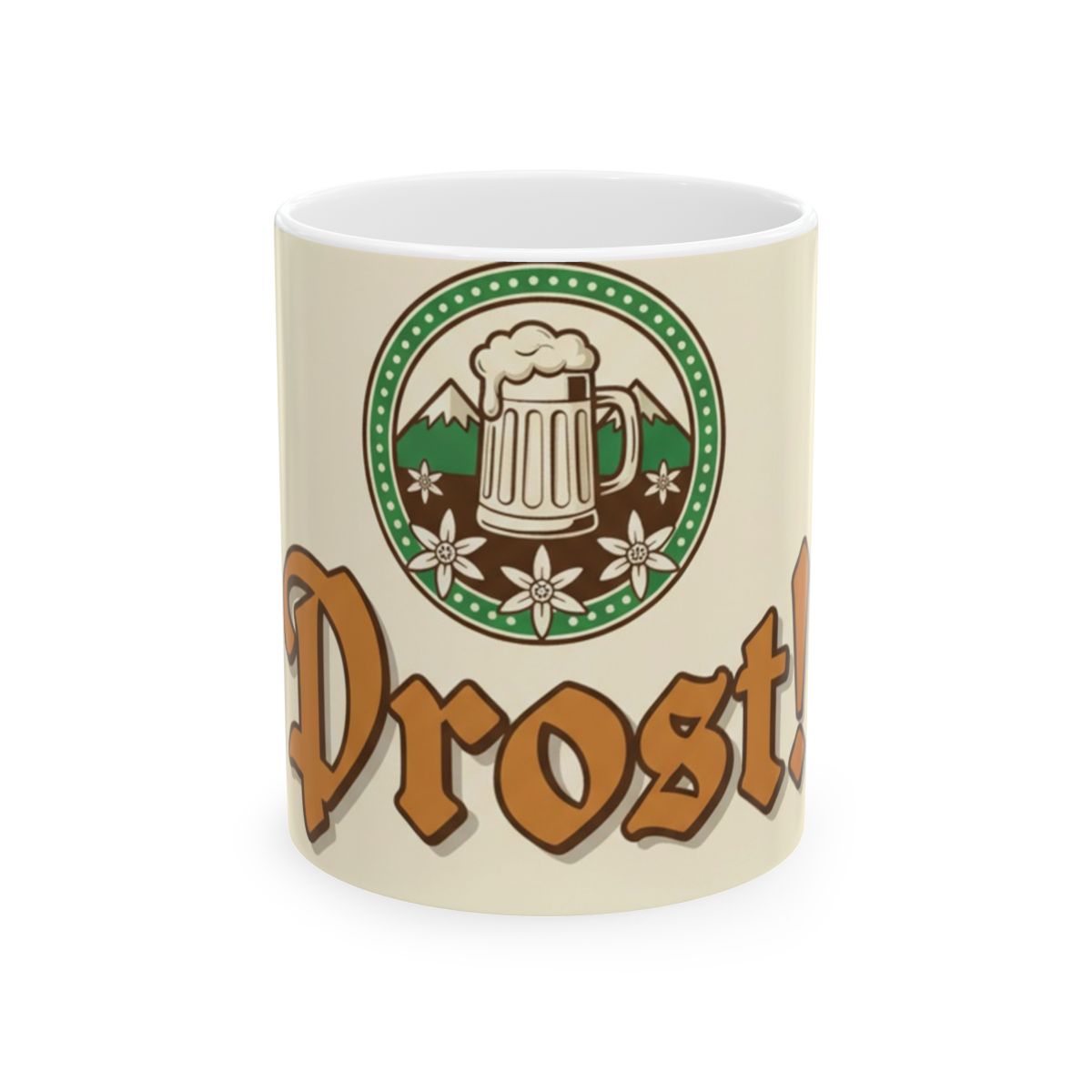
- Glass: a one-liter Maß stein is traditional; any sturdy mug or tulip works at home. If you'd like something with festival character on the shelf, FIRNGOODS has an original in-house design – the Oktoberfest Prost Mug – Alpine Cheers – made to order and produced individually for your order.
- Temperature: 45–50°F (7–10°C). Ice-cold serving mutes the malt character that defines the style.
- Food: bratwurst, soft pretzels with cheese spread, roast chicken, schnitzel, and aged cheeses. Toasty malt loves salty, savory dishes.
What to Wear to Oktoberfest
Plenty of first-timers search this alongside the beer question, so here's the quick answer:
- Traditional dress: a dirndl (blouse, dress, apron – the apron bow's placement even signals relationship status) or lederhosen (leather breeches, checkered shirt, wool socks, sturdy shoes).
- Don't overthink it: many attendees wear normal clothes. Smart casual is completely fine; nobody is turned away for skipping traditional dress.
- Practical notes: comfortable shoes for hours standing on benches, layers for cool September evenings, and a small bag – large backpacks aren't allowed in the tents.
Brewing Your Own
Märzen is a rewarding homebrew project. You'll want Munich and Vienna malts for the toasty base, noble German hop varieties such as Hallertau or Tettnang used sparingly, a clean lager yeast fermented cool (around 50–55°F / 10–13°C), and four to eight weeks of cold conditioning. Plan backwards from September – the name literally means "March beer."
Common Myths
- Myth: It's a dark beer. Fact: Märzen is amber; modern Festbier is golden.
- Myth: It's very strong. Fact: at 5.5–6.5% ABV, it's moderate – above a standard lager, far from a barleywine.
- Myth: It's only a September beer. Fact: seasonal releases start in late summer and run through autumn, and some breweries keep a Märzen available longer.
The Bottom Line
Oktoberfest beer is a malt-first lager – amber Märzen in its classic form, golden Festbier in the modern Munich tents. It's smooth, toasty, and dangerously easy to drink, which is entirely the point. Now you know what's in the stein. Prost!
FAQ
Is Oktoberfest beer the same as Märzen?
Traditionally, yes – Oktoberfest beer is a Märzen, a malty amber lager historically brewed in March and aged until autumn. However, the beer served at the modern Munich festival is a paler, lighter style called Festbier.
What is the alcohol content of Oktoberfest beer?
Typically between 5.5% and 6.5% ABV. That's a bit stronger than a standard lager but still very much a sessionable festival beer.
What's the difference between Märzen and Festbier?
Märzen is the older, amber-colored, toastier style. Festbier is its modern successor in the Munich tents – golden, lighter-bodied, and slightly more hop-forward, though still malt-driven.
What temperature should Oktoberfest beer be served at?
Around 45–50°F (7–10°C). Serving it ice-cold suppresses the toasty malt character that defines the style, so let it warm up slightly out of the fridge.
When is Oktoberfest beer available?
Most breweries release it seasonally from late August through October. A few breweries keep a Märzen in their lineup year-round, but it's primarily an autumn beer.